
Recommended by:








Clean process.
Full flow.
Around 30% of failures in aluminum ingot casting originate from poor lubrication, leading to scrap, downtime, and rework.
Consequences of poor lubrication in casting processes:
Rework of aluminum ingots.
High operating costs due to unplanned downtime.
Excessive lubricant consumption.
Premature failure of mechanisms.
The right solution doesn’t dilute.
It is applied. It performs.
Lubricant products for ingot casting
Permanent mold ingot casting.
In ingot casting, every fill and release requires a lubricant film that keeps stability cycle after cycle, without leaving residues and unexpected downtime.
Non-flammable. Abrasion resistant.
Easy to apply.
More releases per application.
Excellent high-temperature performance.
Higher film efficiency.
No toxic vapors.
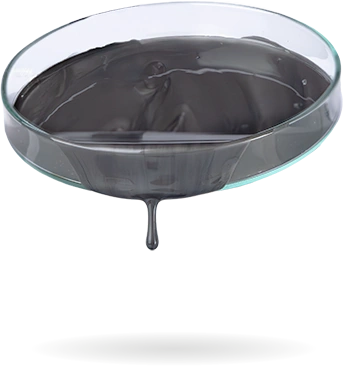
Intercoat G
Water-based graphite release agent for aluminum ingots.
Stable suspension of ultra-fine graphite designed to form a dry lubricating film with excellent sliding performance.
Features:
Water-based with graphite | Gray film | Higher film yield
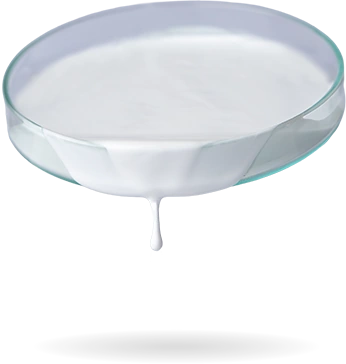
Intercoat B
White release agent for aluminum ingots.
Stable water-based suspension of white solid lubricants, designed to form a high-performance dry lubricant film on sliding surfaces.
Features:
Water-based with salts | White film | Enhanced process cleanliness
Benefits with a single objective:
superior results.
Beyond offering innovative lubricant technology, we focus on providing a suite of services designed to help you implement a more strategic lubrication practice, achieving extraordinary results.
Benefits of our high-performance lubricants:

Purpose-driven technology.
Lubricants designed to address your challenges and unlock your equipment's full potential.

Applied engineering.
We offer tools that translate complexity into precision and clarity for your maintenance operations.

Dedicated support.
More than just consulting, we partner with you to empower your team and transform your industry.

Strategic approach.
We pinpoint critical areas in your operations to identify the levers that maximize results.

Meaningful transformation.
Our integrated service guarantees process productivity and paves the way to a more sustainable future.

Efficient logistics.
We have built a distribution and transportation network that ensures local presence and on-time solutions.
Discover our success stories
We are the partner chosen by industry leaders around the world to transform the future of their industries. Learn how leaders across the globe are improving their results with our approach.

Bonnell Aluminum switches from boron nitride to Interforge KI-C and puts an end to surface defects on its extruded profiles.
At a metalworking facility in the United States, boron nitride had long been the go-to solution for pushers and shear blades — but what once seemed like standard practice was quietly becoming a liability. Staining on aluminum profiles, process contamination, excessive lubricant consumption, and the very real danger of applying the product at temperatures reaching 600 °C had turned a routine procedure into a critical issue of quality, cost, and safety. Discover how a targeted intervention transformed the process and delivered measurable results in the full case study.
Read the full case study
A Colombian manufacturer replaces three separate lubricants with Interforge KI-C and saves $60,788 USD in its aluminum extrusion process.
At an aluminum extrusion operation in Colombia, lubrication had become a fragmented, high-risk affair: three different products, manual application at extreme temperatures, acetylene flame, boron nitride, and wax — each adding its own layer of complexity, cost, and danger for the workforce. The solution called for a fundamental shift in approach: consolidating into a single lubricant and automating its application. The outcome was immediate and far-reaching — greater process control, a dramatic reduction in costs, and a safer working environment. Read the full case study to learn how it was done.
Read the full case study
A manufacturer in Mexico lubricates the bearings of its hardening furnace with Thermaplex LCM 2 and cuts annual maintenance and parts costs by 70%.
At a manufacturing operation in Mexico, the bearings inside a hardening furnace were failing with alarming regularity. The culprit: a grease that simply couldn't hold up against temperatures of up to 450 °C. As it melted away, components were left unprotected — leading to irreversible damage, unplanned downtime, excessive lubricant use, and contamination throughout the work area. The intervention focused on rethinking lubricant selection from the ground up, matching the product to the real-world demands of the process. Discover how operational stability was restored and costs brought under control in the full case study.
Read the full case study
A manufacturer in Mexico switches from boron nitride to Extruoil B7 and eliminates 100% of its operational risk.
At an aluminum extrusion facility in Mexico, boron nitride had become more than an inconvenience — it was a genuine threat. Toxic dust in the air, machinery contamination, health impacts on the workforce, and a slow, costly supply chain had transformed what seemed like a functional solution into an operational and safety hazard. A complete reassessment of the lubrication approach changed everything. Find out how the risk was eliminated and the operation optimized in the full case study.
Read the full case studyFrequently asked questions.
Why does aluminum stick to the permanent mold during ingot forming?
Aluminum can adhere to the permanent mold when there is no stable release film or when it degrades due to high temperature, repetitive cycles, or incorrect application. Adhesion can also increase due to mold oxidation, surface contamination, coating wear, or loss of lubricant properties between cycles. Proper process lubrication helps maintain ingot quality and process stability.
How many filling and emptying cycles should the release lubricant be reapplied in permanent aluminum molds?
There is no fixed number of cycles to reapply a release agent in permanent aluminum molds, as the frequency depends on the industrial lubricant, mold temperature, ingot design, and the severity of the casting process. Release agents formulated for dry film and high thermal stability can maintain their effect for several cycles, provided the lubricant film maintains its integrity and does not degrade due to temperature, mechanical contact, cleaning, or process contamination.
What is the difference between using a graphite-based release agent and a salt-based one in permanent molds?
In aluminum casting, graphite-based release agents typically offer higher release capacity and thermal resistance, favoring processes with intensive cycles and high temperatures. Salt-based release agents usually generate cleaner films and less visible residue transfer to the ingot or mold. Lubricant selection depends on the required balance between release power, process cleanliness, and operating conditions.
What problems are caused by poor application of the release agent in aluminum ingot forming?
Deficient application of the release agent can generate a discontinuous film, areas without lubrication, or excessive lubricant buildup. This can lead to aluminum sticking to the mold, surface defects in the ingot, variability in release, increased mold wear, and production stops for cleaning or process adjustment.
How does the release lubricant affect mold cleanliness?
The release agent formulation directly affects the cleanliness of the aluminum ingot forming process. For example, a water-based dry film release lubricant helps reduce residues, vapors, and contaminant buildup in the mold, facilitating equipment operation and maintenance.
Let’s talk about your process.
Receive a technical recommendation based on the real conditions of your operation.

